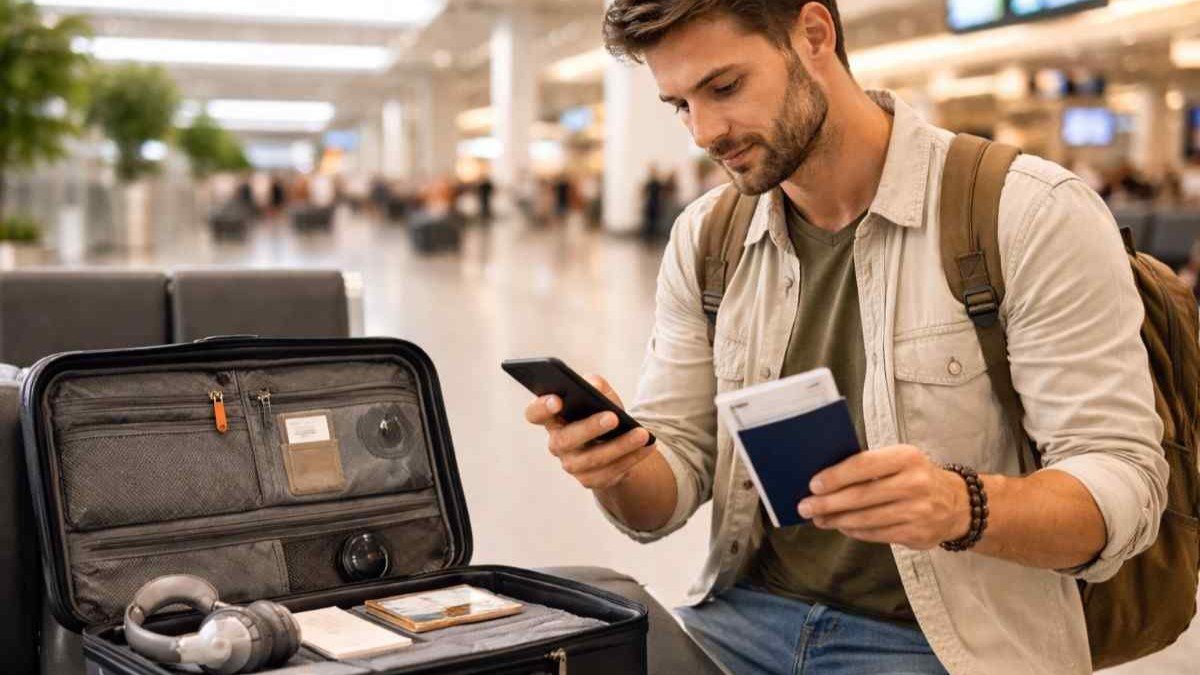
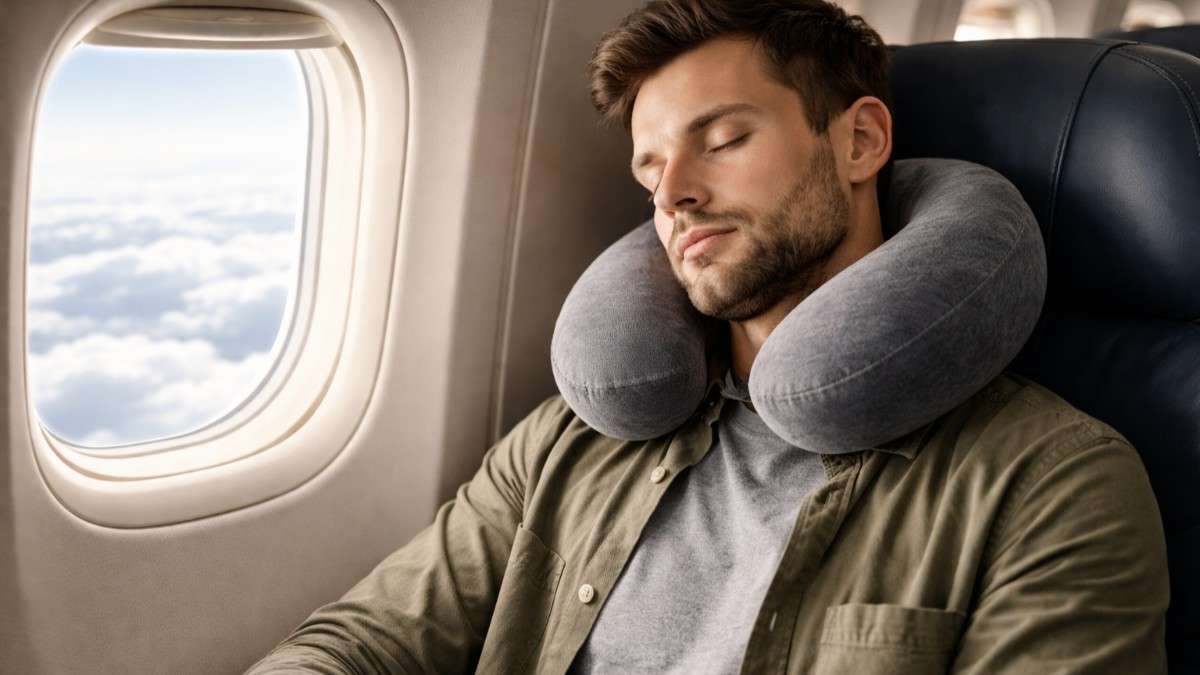
Did you also think a travel neck pillow was just something people carried out of habit? On one exhausting overnight flight, I slept in a twisted position and woke up with a stiff neck that ruined my first day. That experience pushed me to test different options and learn how to actually use one properly. Now, I treat it as an essential part of my travel routine.
Why Neck Support Changes Your Travel Experience
A travel neck pillow is essentially an insurance policy against a stiff neck and a sleepless flight. When your head stays supported, your muscles relax instead of constantly correcting your posture. Over long hours, that support adds up and prevents fatigue from building.
I have noticed that when I travel without one, I keep waking up and adjusting my position. With the right support, I stay asleep longer and feel more refreshed when I land. It is not just about comfort, it is about protecting your energy for the trip ahead.
Pillow Types That Actually Work On Trips
Understanding the different types helped me choose what actually works instead of guessing.
Memory Foam Travel Neck Pillow
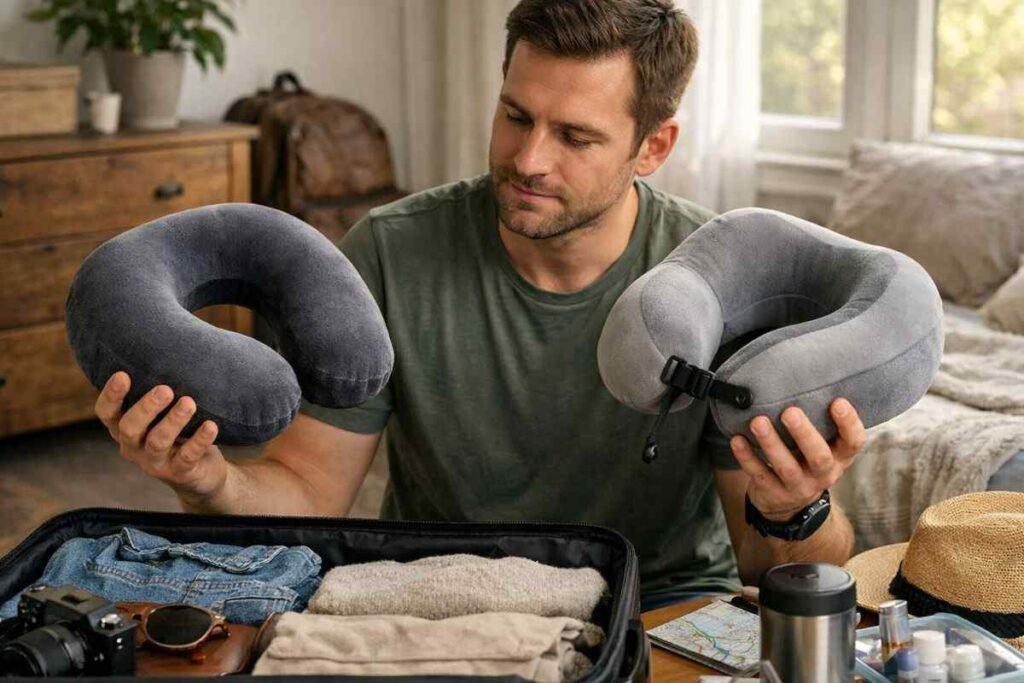
This is the most popular option for a reason. Memory foam contours to your neck and shoulders, giving you a stable and comfortable feel. Many newer designs include cooling gel or ventilation to prevent overheating during long flights. I personally use memory foam for flights longer than five hours. It provides consistent support without needing adjustment, which makes a big difference when you are trying to stay asleep.
Inflatable Travel Neck Pillow
This type is perfect if you travel light. You can adjust firmness by adding or releasing air, and it packs down very small when not in use. I use inflatable pillows for short trips or when I want to avoid carrying bulk. The trade-off is that they sometimes feel less stable compared to foam options.
Wrap Style Travel Neck Pillow
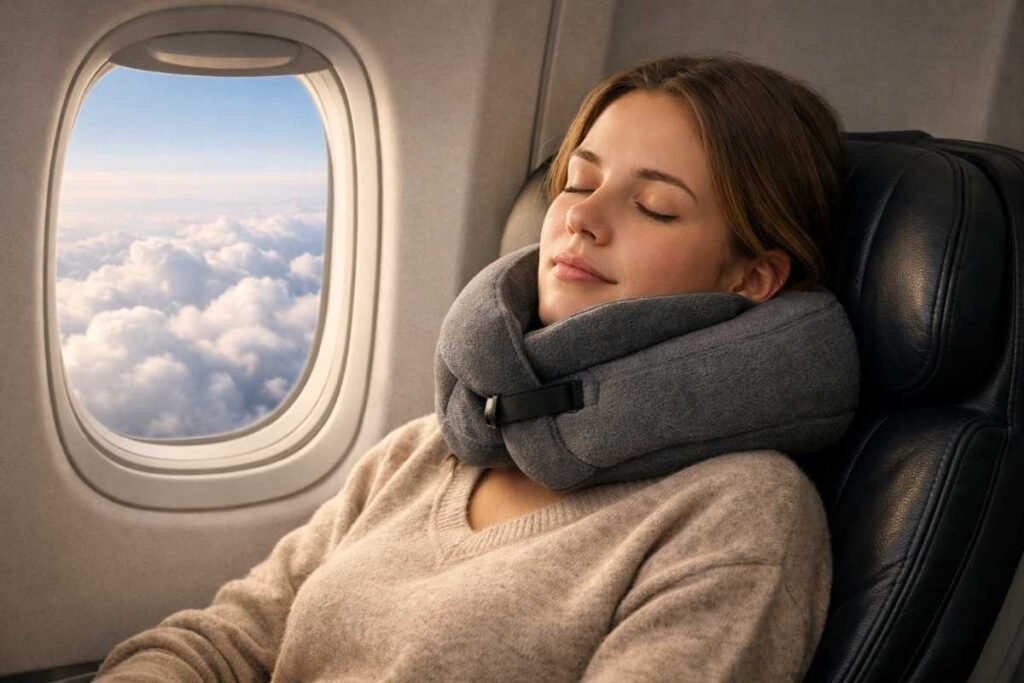
Wrap or scarf-style pillows use an internal support system instead of padding. They hold your head upright and prevent forward movement. These are great if your head tends to drop forward when you sleep. I found them especially useful in middle seats where side support is limited.
Infinity And Bolster Style
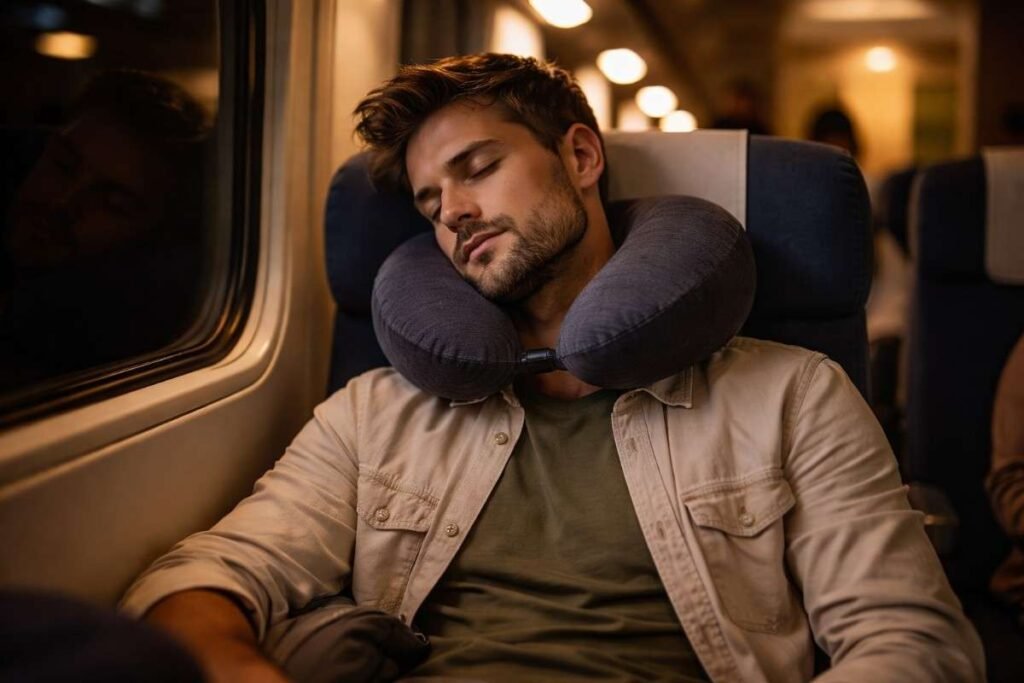
These are long, flexible pillows that can be twisted into different shapes. They work well if you like to lean against a window or need support for multiple positions. I like using these during train journeys or road trips because they adapt easily to different seating setups.
What Really Matters Before You Buy One
Choosing the right pillow is more about function than appearance.
Support Vs Softness
A pillow that feels too soft will not hold your head in place. I look for designs that create a cradle effect so my head does not tilt or drop while sleeping. This is one of the biggest mistakes I made early on. Comfort without structure does not actually solve the problem.
Attachment And Stability
Some pillows come with straps that attach to the airplane seat. This prevents you from sliding down while sleeping. I find this feature especially helpful on long-haul flights where maintaining position is difficult.
Washable And Easy To Maintain
Travel can get messy. I always choose a pillow with a removable cover that I can wash easily after trips. This keeps the pillow fresh and makes it practical for frequent use.
Portability And Storage
If you prefer to travel light, look for compressible designs that fit into small bags. Some memory foam pillows now come with compact carrying cases. I balance comfort and portability depending on the trip. Longer journeys always get priority for comfort.
How To Use Neck Pillow During Trips
This is where most people go wrong, including me when I first started.
Position It For Your Sleep Style
Instead of placing it behind my neck, I often rotate the pillow so it supports my chin. This prevents my head from falling forward. Once I started doing this, my sleep improved significantly during flights. I also focus on small comforts like comfortable travel shoes to stay relaxed throughout the journey.
Adjust Your Seat And Posture
I slightly recline my seat and relax my shoulders before settling in. A neutral spine position makes the pillow more effective. Without proper posture, even the best pillow will not feel comfortable.
Combine With A Sleep Routine
I use an eye mask or calming audio to signal my body that it is time to rest. These small habits make it easier to fall asleep quickly. The pillow works best when it is part of a complete travel sleep setup.
The Right Way To Use It Step By Step
This step-by-step routine has worked consistently for me across different trips.
- I start by choosing the right orientation based on how I plan to sleep. If I expect my head to tilt forward, I rotate the pillow so it supports my chin.
- Then I adjust my seat slightly so my back stays aligned and my shoulders remain relaxed.
- Once I settle in, I avoid constant movement and let my body adapt to the position.
- I also create a calm environment by limiting distractions, which helps me fall asleep faster and stay asleep longer.
Mistakes That Ruin Your Comfort
Avoiding these mistakes made a huge difference in my travel comfort.
Using It The Wrong Way
Most people wear the pillow behind their neck, which often causes the head to drop forward. I learned that front support works better in many situations. This simple change improved my experience more than switching pillow types.
Choosing Based On Looks
A stylish pillow does not always provide good support. I focus on structure and fit rather than appearance. Function always comes first when it comes to travel comfort.
Ignoring Travel Context
Different trips require different solutions. A pillow that works on a plane may not work in a car or train. I adjust my choice based on how and where I am traveling.
When It Makes The Biggest Difference
Knowing when to use it helps you get the most value.
Long Flights
This is where a travel neck pillow becomes essential. It helps maintain comfort over several hours and prevents neck stiffness. I never board a long-haul flight without one now.
Train And Road Travel
I also use my pillow on trains and during long drives as a passenger. It adds consistent support across different travel situations. This flexibility makes it a useful all-around travel tool.
Layovers And Waiting Time
Airports can be exhausting. Having a pillow allows you to rest comfortably even while waiting. This has helped me stay energized during long travel days.
Frequently Asked Questions
1. Is A Travel Neck Pillow Worth It?
Yes, a travel neck pillow improves sleep quality and reduces neck strain during long trips.
2. Which Travel Neck Pillow Is Best?
Memory foam options provide the best balance of comfort and support for most travelers.
3. Can You Use A Travel Neck Pillow Incorrectly?
Yes, incorrect positioning reduces its effectiveness. Proper placement is key to good support.
4. Does A Travel Neck Pillow Help With Jet Lag?
It helps you rest better during travel, which can reduce fatigue linked to jet lag.
Why I Never Travel Without It
Once I started using a travel neck pillow correctly, my travel experience changed completely. I arrive feeling rested instead of drained, and I spend less time recovering from the journey. It is a simple upgrade that makes a noticeable difference. If you travel regularly, this is one of the easiest ways to improve comfort, protect your energy, and enjoy your trip from the moment you arrive.